Raffles and auctions solve different fundraising problems. A raffle is simple: supporters buy tickets and have a chance to win. An auction is different: supporters bid for specific prizes they actually want. For UK PTAs, the right choice depends on the prizes available, the event format, the time volunteers have, and the rules that apply to the activity.
Many school communities still run successful raffles at Christmas fairs, summer fairs and quiz nights. Online auctions are another option, especially when a PTA has a smaller number of prizes that families may value differently. This guide compares raffles, auctions and online auctions so committees can choose the format that fits their own school rather than assuming one approach is always better.
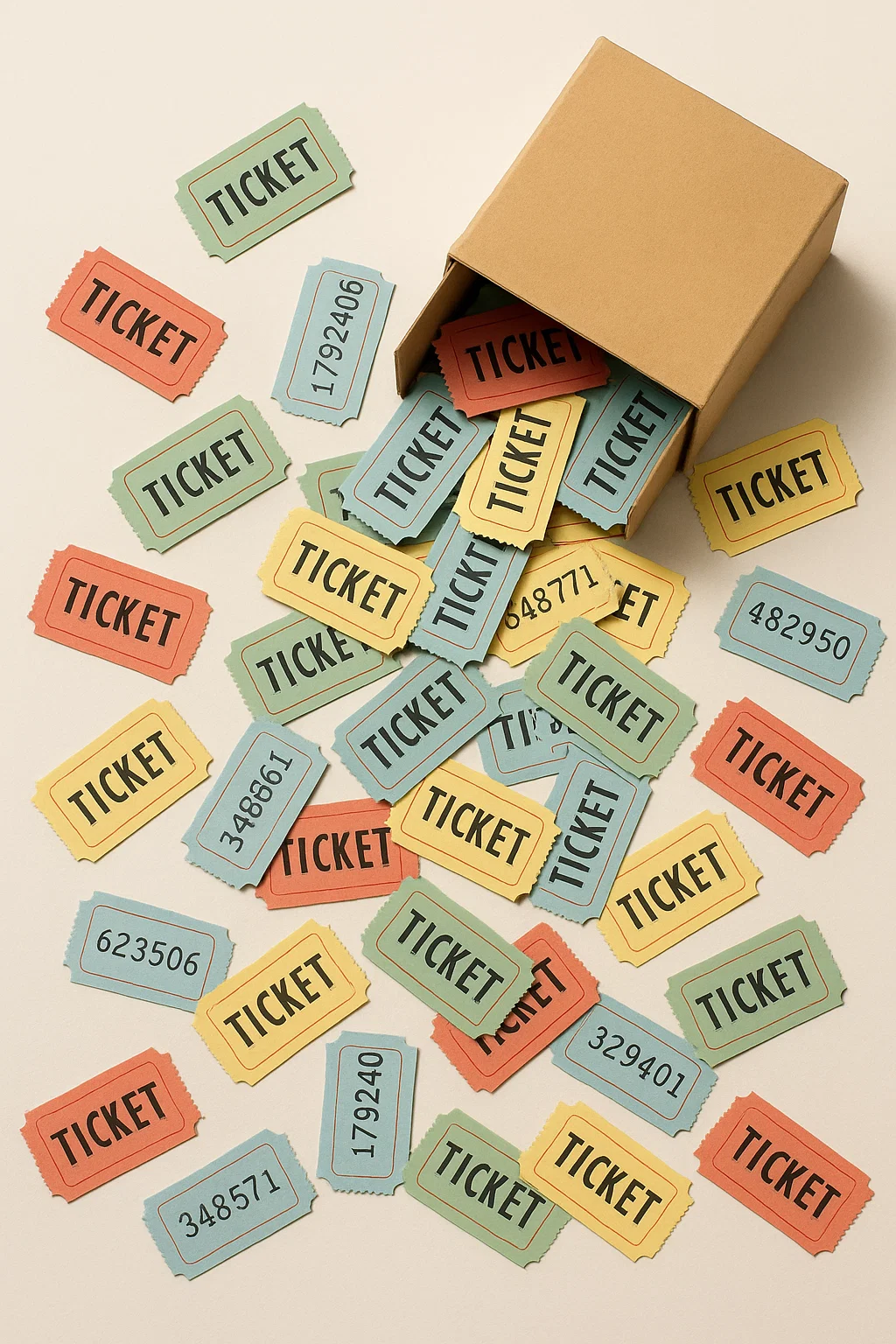
Raffles and auctions are different tools
It helps to separate the formats before deciding what to run. The words can get used loosely in school fundraising conversations, but supporters experience each activity differently.
Raffle
Supporters usually buy one or more tickets for a chance to win. Each ticket has the same chance of being drawn. Raffles can work well where the PTA wants a simple, familiar fundraiser.
Auction
Supporters bid for specific lots. The lot goes to the highest bidder, subject to the auction rules. Auctions can work well when some families may value particular prizes more highly than others.
Online auction
An auction hosted online, so supporters can browse and bid over several days. It can include parents, carers, relatives and supporters who cannot attend the event in person.
When a raffle may be the better choice
Raffles are popular for a reason. They are familiar, easy to explain and can let lots of families take part at a low entry price. A raffle may be the more sensible option when:
- the PTA wants a very simple fundraiser with minimal explanation for supporters
- lots of families can take part at a low ticket price
- the prizes are broad and general, such as hampers, chocolates or mixed donated items
- the fundraiser is attached to a school fair, fete, quiz night or other one-off event
- volunteers already understand how the school usually runs raffles
- the PTA has checked the relevant rules for the type of raffle or lottery being run
When an auction may be the better choice
Auctions are not automatically better than raffles, but they can be a better fit for certain prize lists. They work particularly well when supporters are likely to compete for specific lots rather than buying a general chance to win.
An auction may make sense when:
- the PTA has fewer but stronger prizes
- some prizes are experiences, vouchers or “money can’t buy” lots
- families are likely to value different prizes differently
- local businesses have donated prizes with a clear retail value
- the PTA wants bidding to stay open before, during or shortly after an event
- the committee wants a clearer record of bids than paper bid sheets provide
Realistic UK PTA auction lots might include a children’s holiday camp voucher, a family restaurant voucher, local attraction tickets, pantomime or theatre tickets, a sports coaching session, a family photography session, a hair, nails or beauty voucher, reserved seats at a school performance if the school is happy to offer them, or a headteacher-for-the-morning style experience where that is appropriate.
Online auctions can sit alongside school events
An online auction does not need to replace an in-person event. It can sit alongside a Christmas fair, summer fair, autumn fair, school disco, quiz night, film night, fireworks night or bonfire night event where the school already runs one, cake sale, non-uniform day or second-hand uniform sale.
A practical pattern is to share the auction link before the event, display QR codes on the day, mention a few highlight lots in newsletters and WhatsApp groups, keep bidding open for a short period afterwards, and close the auction at a clear published time. If you are new to online auctions, the step-by-step PTA auction guide covers the planning sequence in more detail.
Compliance and admin: what PTAs should check
This article is not legal advice. UK rules around raffles, lotteries, prize draws and fundraising can depend on how the activity is structured. Before running a raffle, lottery or prize draw, PTAs should check current guidance from the Gambling Commission and, where relevant, their local authority or school/trust policies.
Raffles, lotteries, prize draws and prize competitions are not all the same thing. The Gambling Commission explains that fundraising raffles and lotteries are forms of gambling, and organisers must follow the rules for the type of lottery they plan to run. Some event raffles may fall under incidental lottery rules; other fundraising lotteries may require local authority registration or, at larger scale, a Gambling Commission licence.
Online promotion or ticket sales can change the position, so PTAs should check current guidance before running an online raffle or lottery. Auctions are different from raffles because supporters bid for specific lots rather than buying a chance to win, but organisers should still make the auction rules, payment process, closing time, collection arrangements and prize terms clear.
Useful official guidance includes:
- Gambling Commission: Fundraising, raffles and lotteries
- Gambling Commission: Types of lottery you can run without a licence
- Gambling Commission: How to run a fundraiser with lotteries or raffles at events
- Fundraising Regulator: Lotteries and raffles
Practical comparison
Use the comparison below as a starting point for a PTA committee discussion. On a phone, each point is easier to read as its own card rather than as a wide table.
Simplicity
Raffle: Usually simple for supporters to understand.
Auction: Needs clear lot descriptions, bidding rules and closing times.
Prize type
Raffle: Works well for broad prizes and hampers.
Auction: Works well for higher-value vouchers, experiences and local services.
Supporter behaviour
Raffle: Supporters buy tickets for a chance to win.
Auction: Supporters choose the lots they want and decide how much to bid.
Event fit
Raffle: Works well at fairs, fetes and one-off events.
Auction: Can run before, during and after an event.
Admin
Raffle: Ticket handling and draw process must be managed carefully.
Auction: Lot setup, winner follow-up and payment or collection need planning.
Compliance
Raffle: Rules depend on the type of raffle or lottery and how it is run.
Auction: Different from a raffle, but still needs clear terms, payment and prize fulfilment.
A simple decision guide
Choose a raffle if
- you want a familiar low-cost fundraiser
- most prizes are broad and general
- the event already has a raffle tradition
- you have checked the relevant raffle or lottery rules
Choose an auction if
- you have fewer, stronger prizes
- prizes have clear value or strong local appeal
- families may bid more for specific lots
- you want bidding to stay open beyond the event
- you want a clearer online record of bids
Use both if
- the PTA has a large event and enough volunteer capacity
- the raffle handles smaller or general prizes
- the auction is reserved for higher-value or experience-based prizes
- both activities can be explained clearly to supporters
How Aucly can help with online auctions
If an auction fits your prize list, Aucly’s PTA auction pages can help you list lots online, share one auction link with parents and supporters, keep bidding open around an event, avoid paper bid sheets, manage online bids and collect card payments where enabled. You can also read more about Aucly card payments with Stripe if payment collection is part of your planning.
Aucly is for auctions, not for turning raffle-style activities into something else. If your PTA is running a raffle, lottery or prize draw, still check the relevant official guidance and your school, academy trust or local authority policies.
Final thought
Raffles still have a place in UK school fundraising. The question is not whether raffles or auctions are “better”, but which format fits the prizes, event and volunteer capacity you actually have. For many PTAs, the strongest approach may be to keep raffles simple and use online auctions for the prizes families are most likely to compete for.